Fall 2009 CapitalWays Transportation Plan Amendment
MORPC adopted Resolution T-20-09 on November 12, 2009 to amend the CapitalWays Transportation Plan to include 3C passenger rail service. The Ohio Department of Transportation and the Ohio Rail Development Commission have been working through the study process to start rail service between Cincinnati, Dayton, Columbus and Cleveland. On October 2, 2009, they submitted a funding application to the U.S. Department of Transportation for American Recovery and Reinvestment Act (ARRA) funding for the project. It is anticipated that if ARRA funding is obtained service could start by 2012. See 3CisME.ohio.gov for additional details on the project.
In conjunction with this amendment, the air quality conformity determination documentation for the Transportation Plan was updated. As a result of the Columbus 8-hour ozone nonattainment area being redesignated to attainment in September, new on-road mobile sources budgets were established. It is required that transportation air quality conformity be redone with respect to these budgets. The on-road mobile emission impacts of the 3C passenger rail service was incorporated into this analysis.

CapitalWays Transportation Plan
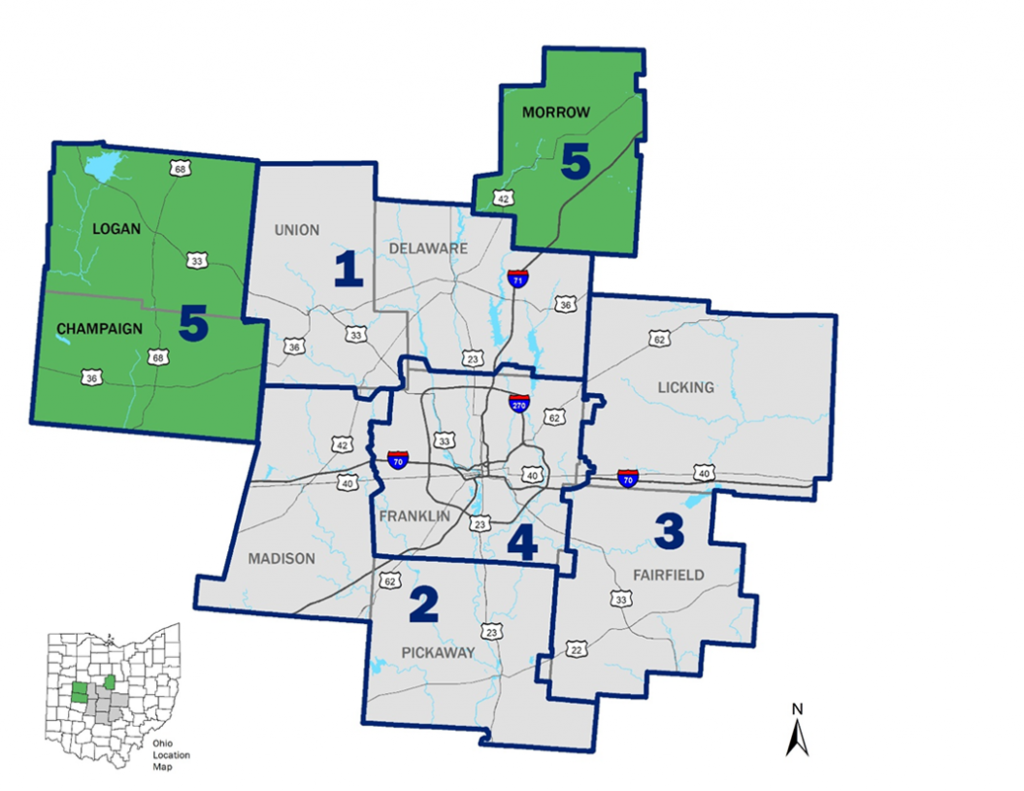
The CapitalWays Transportation Plan is a forward-looking plan, anticipating the needs of Central Ohio through the year 2030. Predicting how busy roads will likely be, how much people will travel, and where people will be going, a Regional Transportation Plan pinpoints where we will need new roads, repairs to old roads, expanded transit service, and more bikeways.
The CapitalWays Plan entails many components: safety, freight, roads, bikeways, pedestrian services, public transit, transportation maintenance, transportation security, the Intelligent Transportation System (which includes computerized message boards), analysis for air quality, and the forecasting of future land use.
MORPC develops its regional transportation plan over the course of four years. First, transportation planners analyze land use and development data and establish the region’s future situation in terms of the numbers and locations of people and jobs. Then, they work with local governments, transit agencies, state agencies, and members of the private sector that have a role in transportation to identify viable transportation projects. Finally, they devise strategies to meet the transportation needs of the people studied in the original analysis.
The CapitalWays Transportation Plan was adopted by the Policy Committee on May 8, 2008.
Additional Information
Standalone list of unmapped projects and map of projects
Project Evaluation Report—a report on all of the candidate projects considered for inclusion in the CapitalWays Transportation Plan |